
Life finds its way
Whether emerging from sparse sands or foraging through a dense woodland, life thrives wherever it finds itself

Lichen doesn’t need much. A stone to sit on, some sun, air to eat. (Really, it sort of eats air.)
Bison? They need a bit more. Though for something that can weigh up to 2,000 pounds, they do surprisingly well in scrublands with some grass.This summer, my family took a 5,000-mile road trip across the United States, transiting from wooded mountains to parched deserts. Everywhere, there was life. Abundant.My last essay shared the first lesson from that journey: Wherever we stand, the rock below and the skies above carve out unique landscapes, both for today and for the (very) distant future.
The second lesson? The rock below and the skies above also dictate the life that graces our landscapes, no matter the extremes – and sometimes, those lives follow similar paths.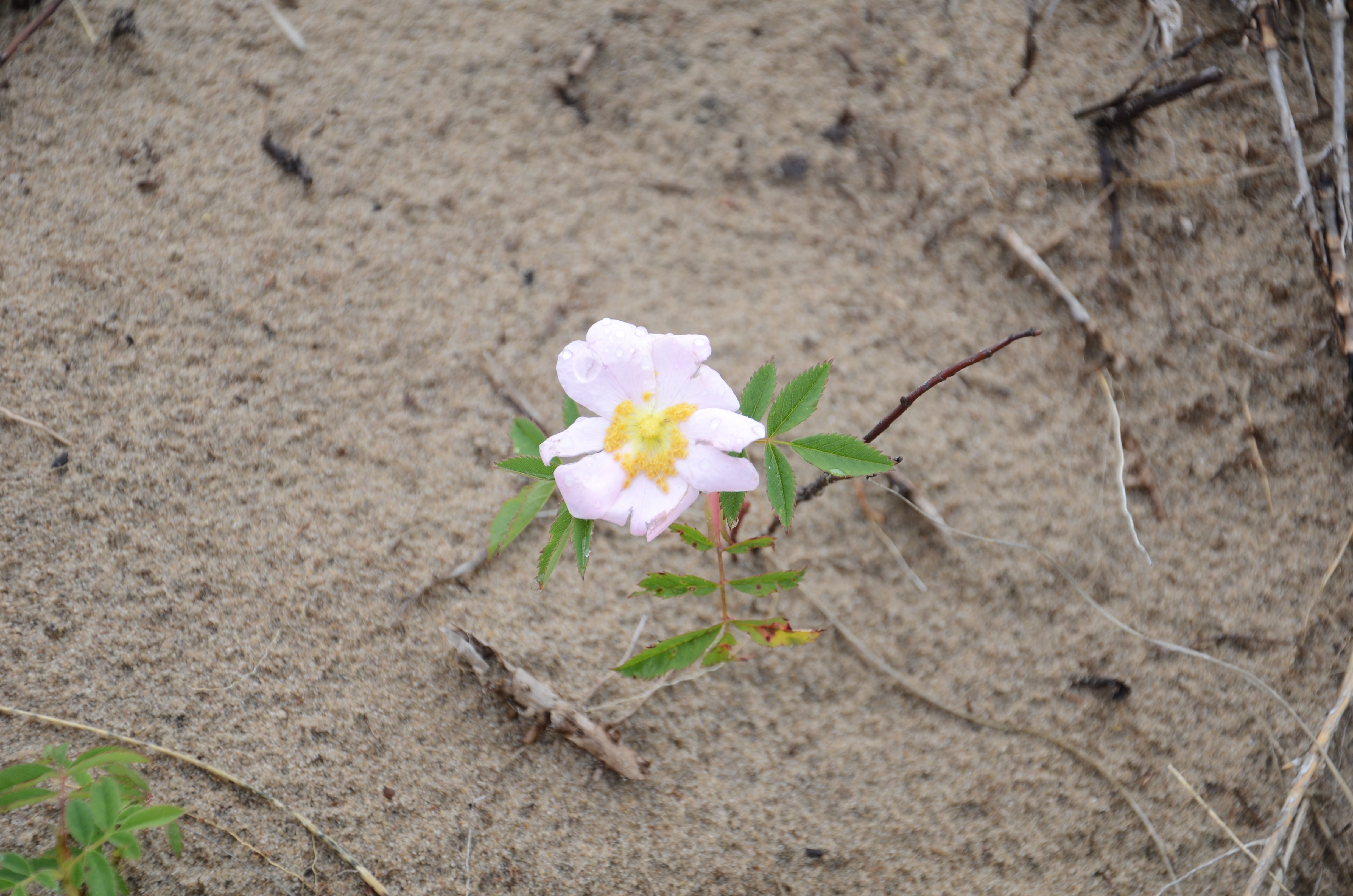
No, it’s cool, I’ll just live on this barren boulder
The first leg of our trip passed through the lush woodlands of the U.S. East Coast and the farmlands of the Midwest, and while life had its moments, much was what we’d seen before.
When we hit South Dakota, everything changed.Badlands National Park earned its name because the land is pretty crappy for most things people would want to do on it.
Farming? Not likely. Going 100 feet without getting stuck in loose sand or (fleetingly rare) deep mud? Not likely.It also looks like another planet.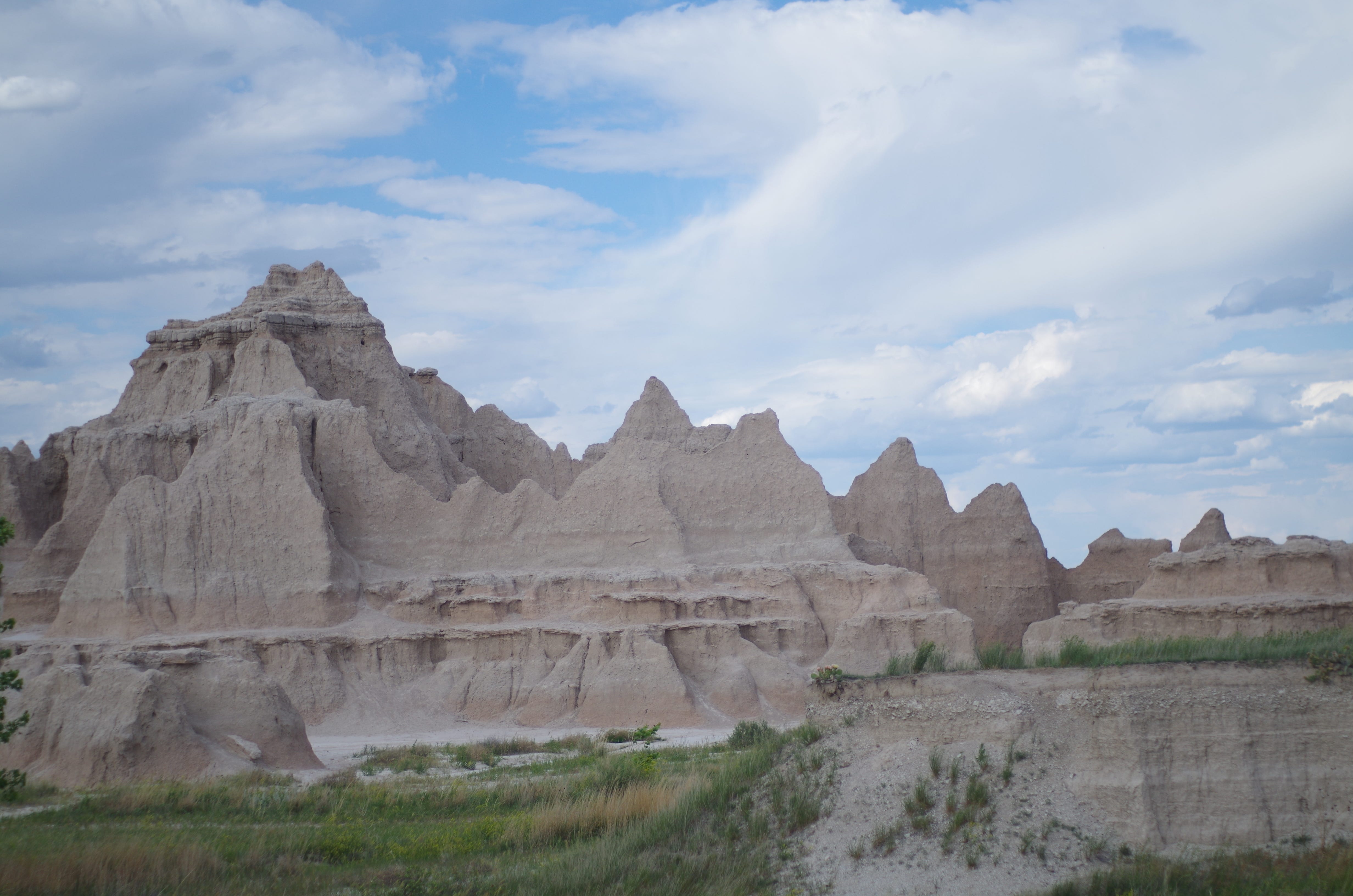
Alternating layers of relatively loose sediment and ash, deposited over millions of years, eroded and carved by the rare storm.
And yet, life thrived. Everywhere we looked.Sure, lichen had a foothold. But, so did adorable bunnies (and the rattlesnakes that appreciated said bunnies). Vibrant grasses, exotic to us. Succulents.Everywhere.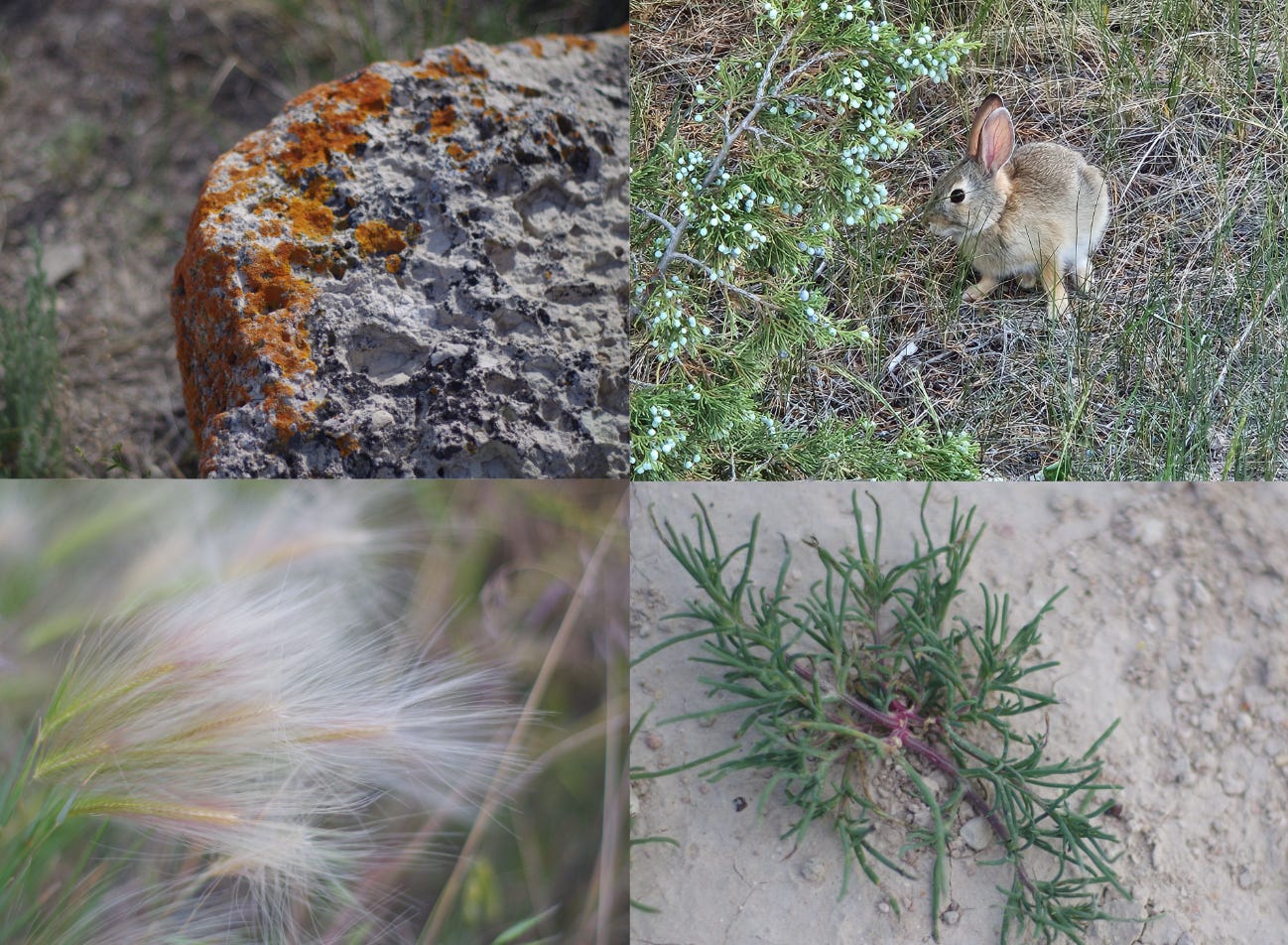
From sparse and empty to sparse and hellscape-y
As we travelled further West, we kept seeing that same commitment to vibrant survival.
Once again, the extreme critters could live in any insane space – boiling geysers, hypersaline waters.In Utah, we went to Great Salt Lake, and were deterred from exploring by an indescribable swarm of flies that stretched as far as we could see, with scenes we wished we could unsee.
Harsh, extreme, saline environment with almost no biodiversity, where the largest water critter is a brine shrimp.And yet, just onshore, life was exploding with millions (billions? kajillions?) of flies.The geysers and hot springs at Yellowstone National Park were equally dramatic, host only to microbes – it seemed.
And yet, those same environments also hosted the big guys. Bison, deer. All the critters that need so much more than heat and slurry.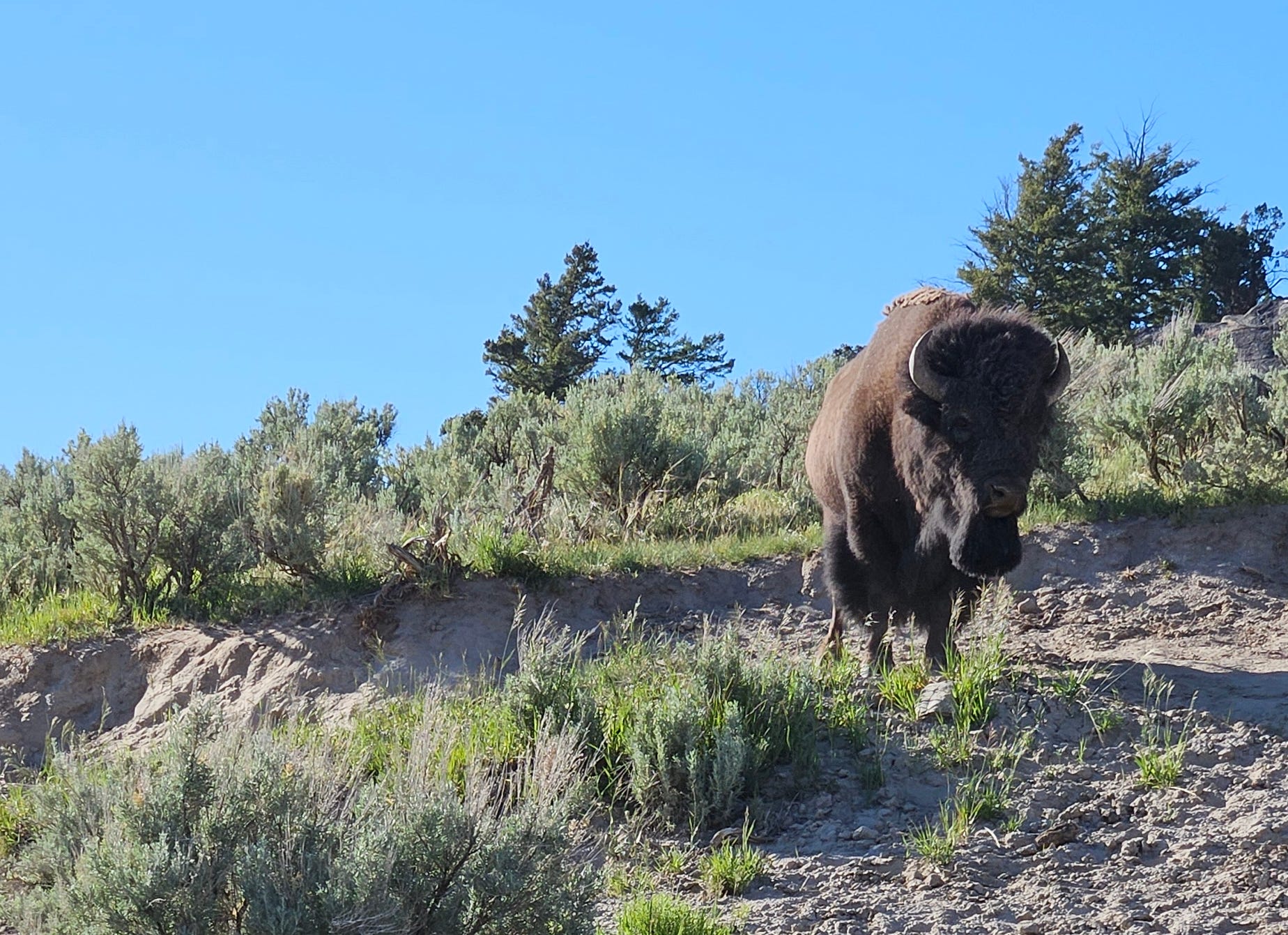
At Yellowstone, with its landscapes diversely spread across Wyoming, Idaho, and Montana, bison not only graze adjacent to sulfurous hot lands, they walk right through them. (Carefully. They aren’t stupid.)From site to site across the United States, whatever crazy environment the rock and weather crafted into existence, it was an environment robust for life to take hold.Haven’t I seen you somewhere before? With all that flourishing living goodness, it may not be surprising that some critters started to repeat themselves.
Life likes to fill niches. Whatever environment it’s given, life adapts.Yes, Charismatic Fuzzy Animal in one place likely meant a Charismatic Fuzzy Animal in another place. Even the same animal, if variant.Like squirrels. They make ‘em super cute out that way.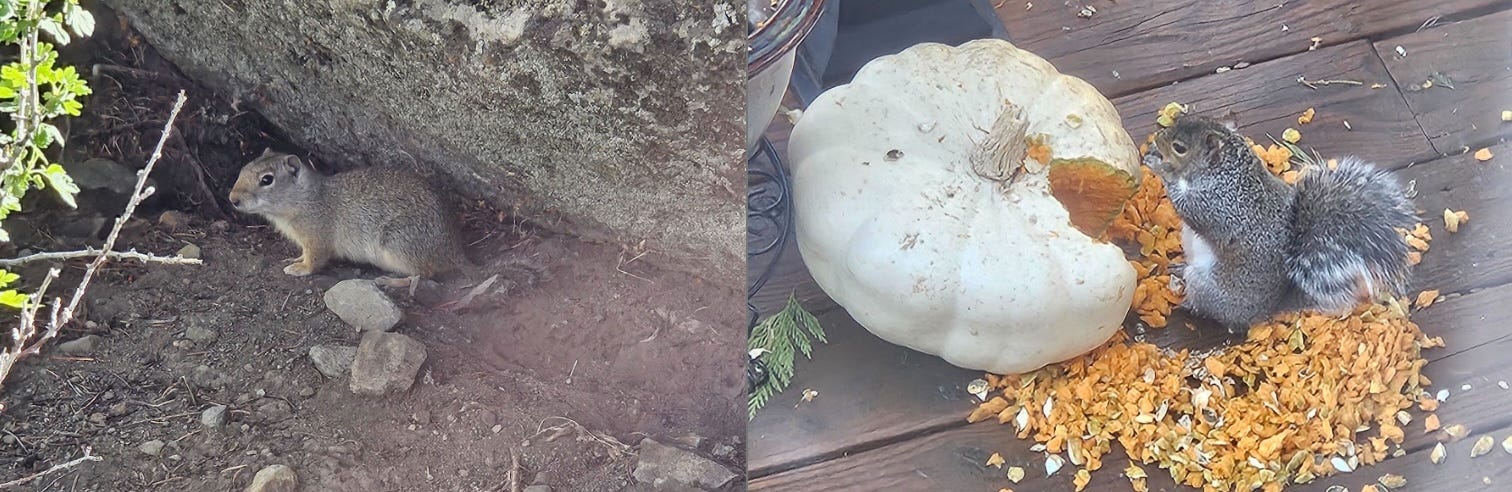
Insects, in particular, were out in force, with a few familiar shapes – though definitely some unfamiliar behaviors.These pollen wasps find apartments, each one nesting in its own Rocky Mountain penstemon flower.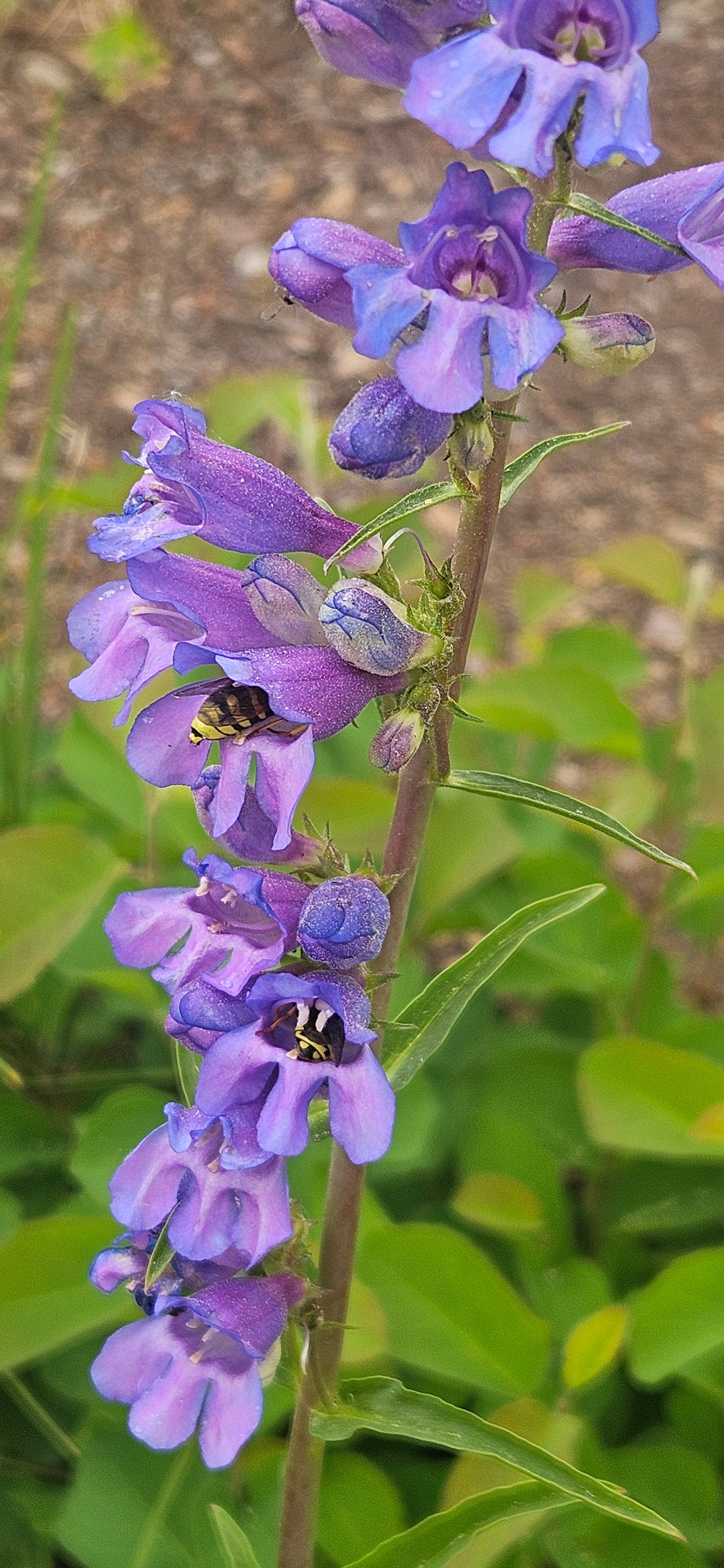
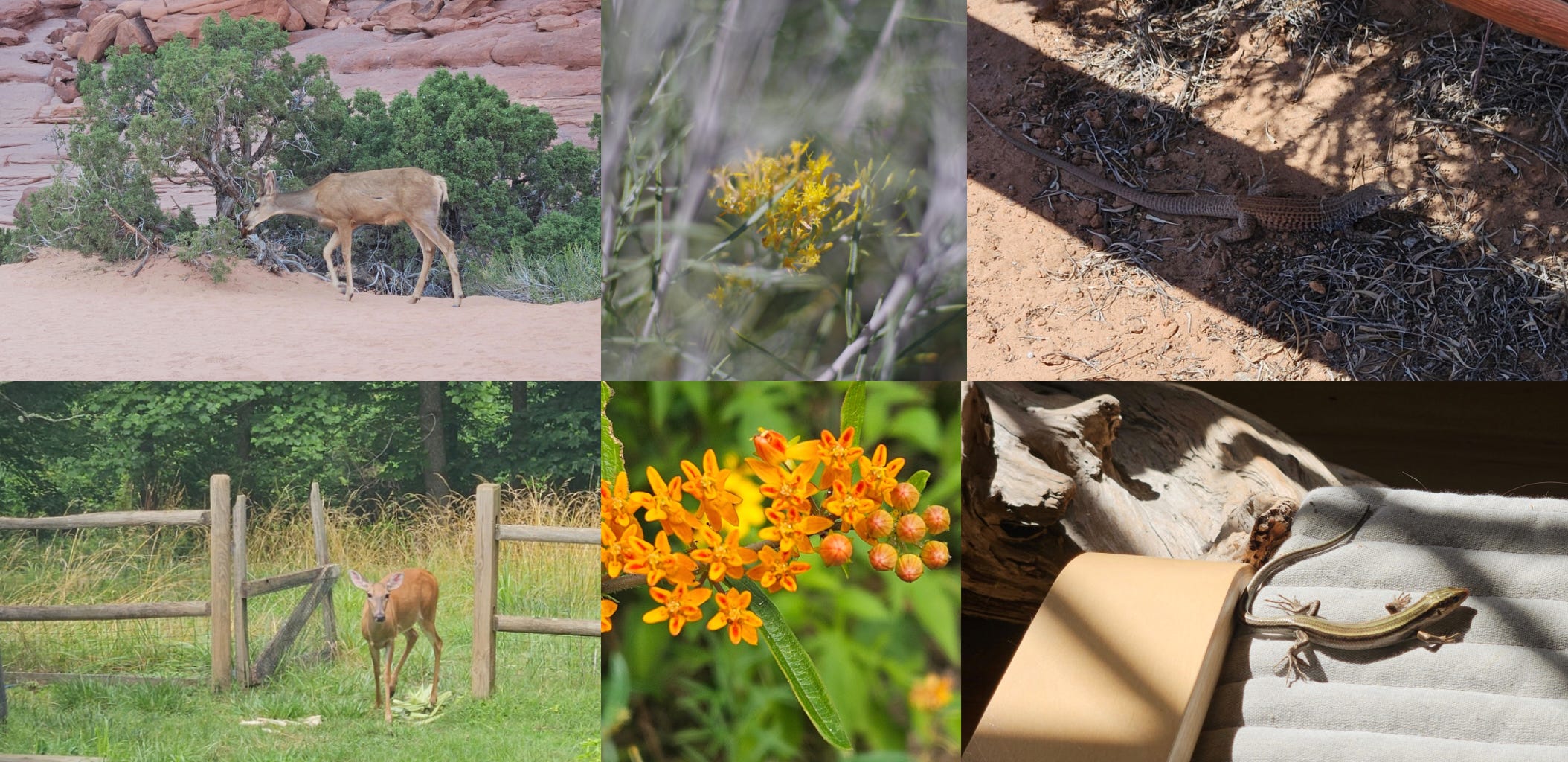
But, we also saw combinations of life that had remarkable similarity in very unsimilar places.In the desert of Utah, at the paired Canyonlands and Arches National Parks, we saw the same combination of flower-lizard-deer at that we left in lushly wooded Virginia.
And that’s despite the desert parks averaging 8.6 inches of rainfall per year, vs. the 41.6 inches here in our eastern deciduous forest.
When another world is actually on another world
Life finds its way.
This struck me pretty hard standing at Yellowstone’s microbial havens, saturated as they are with extreme bacteria and even more extreme viruses,
I could not stop thinking about how relatively easy it was for life to kickstart on a crucible Earth – and, with my scifi-author gears turning, what that means for life everywhere not on Earth.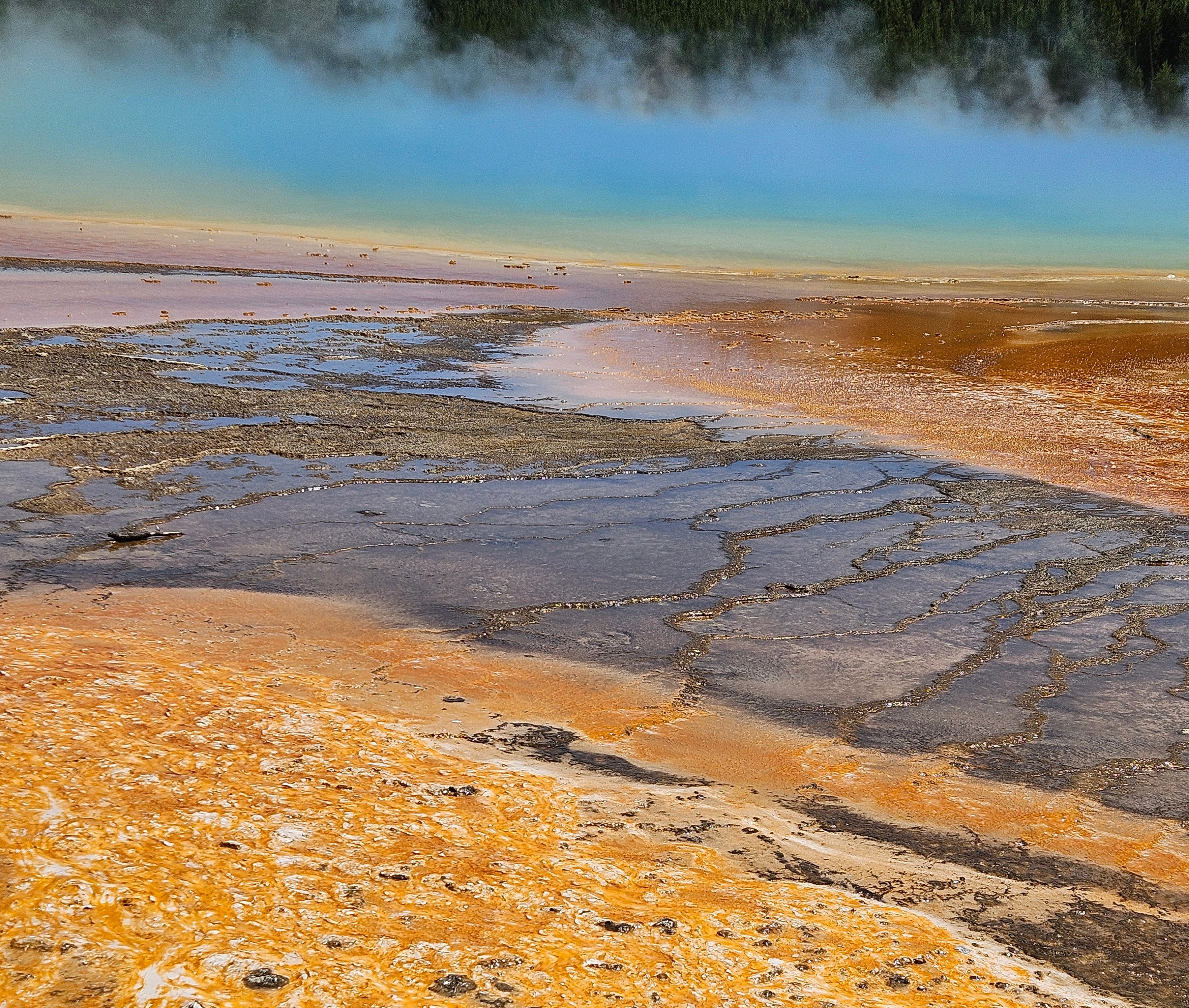
We can now see planets with enough clarity to directly detect atmosphere.
Paired with centuries of Earth geology, analyses of asteroids and meteorites give us a sense of how the universe’s chemistry prefers to form rock, no matter what planet it’s unfolding on.
Observations of stars, nebulae, and even interstellar space reveal how the molecules necessary for life are not uncommon across a 13.8-billion-lightyear expanse.
So, we have a good sense for the variety of landscapes in other lands. We also have a good sense for the variety of life that can thrive there, and what won’t hold it back.Too much heat? No problem. Too much salt? Nope.(Not even for plants – Femke de Jong recently had a bit about plants pushing back at salt. It’s all incredibly sophisticated.)
We sort of know what to imagine, and how exotic it can get.Even Space Giraffes, an image Kevin McMullen permanently etched in my head.
Now I’m left wondering: If life in verdant, moist Virginia can support life similar to that in rusted, arid Utah, what can we expect from a rocky, oxygen-rich planet not too far from a yellow sun?
For more on what life on other worlds may be like, check out this NASA Astrobiology site, chock full of insights from decades of study – it’s a field that is growing, and the discoveries are incredible.
Post-credits scene: Alien life is a staple of scifi, but sometimes we forget how genuinely creative authors and directors have been as they shaped those worlds – in some films, for entire ecosystems. Case in point, as you scroll this list of 50 alien-saturated films from IMDB—some familiar, some less so—the variety starts to sink in.
Last week’s Someday, in Science: A 5,000-mile journey and the shape of things to come*
Thanks for visiting! If you read it, please repost it, so others can find it!

Love this! When I study resilience in people, I'm often reminded of the tremendous power (and commonness!) of resilience all around us in the natural world.
What a great adventure. I love this take on it — a theme so much more interesting than a typical travelogue.